Plant Care
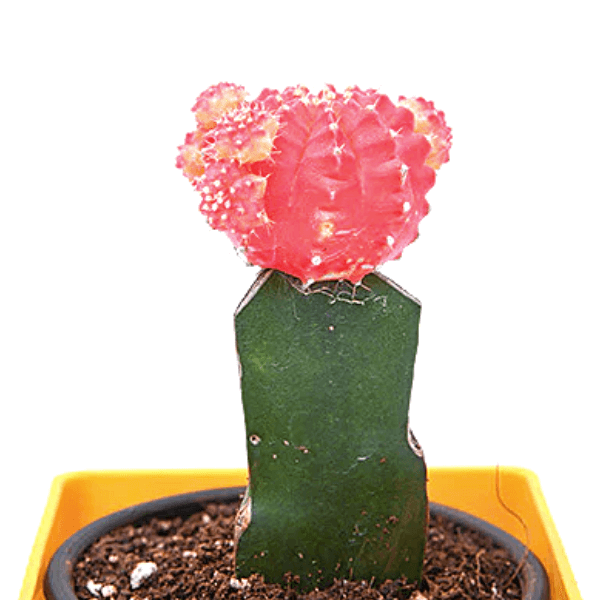
Light: Place the Moon Cactus in bright, indirect sunlight. It can tolerate some direct sun, but protect it from intense midday sunlight, which can cause sunburn on the colorful top.
Watering: Water sparingly, allowing the soil to dry out completely between waterings. The rootstock cactus is more drought-tolerant than the top cactus, so be cautious not to overwater.
Soil: Use a well-draining cactus or succulent potting mix. The soil should be porous to prevent waterlogging, which can lead to root rot.
Temperature: The Moon Cactus prefers temperatures between 59-86°F (15-30°C). Protect it from temperatures below 50°F (10°C) as cold temperatures can damage the plant.
Humidity: Average indoor humidity levels are suitable for the Moon Cactus. Avoid placing it in excessively dry or humid conditions.
Fertilization: Feed sparingly with a balanced, water-soluble fertilizer diluted to half strength during the growing season (spring and summer). Reduce fertilization during the dormant period in winter.
Container: Choose a small, shallow pot with drainage holes to accommodate the shallow root system of the Moon Cactus. Ensure the container allows excess water to drain freely.
Pruning: Trim any dead or damaged parts of the cactus as needed to maintain its appearance.
Propagation: The colorful top of the Moon Cactus cannot be propagated due to its lack of chlorophyll. However, you can propagate the rootstock cactus through stem cuttings.
Pests: Monitor for common cactus pests such as scale insects, mealybugs, and spider mites. Treat infestations promptly with insecticidal soap or neem oil.
Support: The Moon Cactus generally does not require additional support and can maintain its upright growth habit on its own.